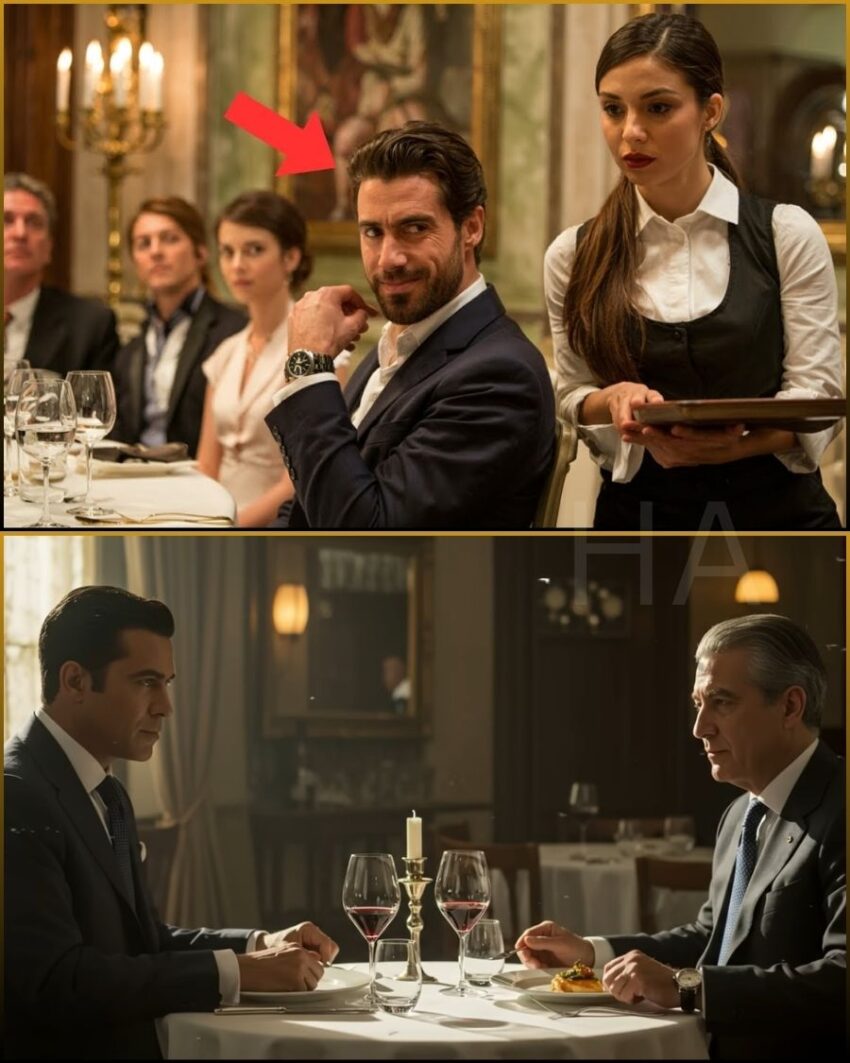
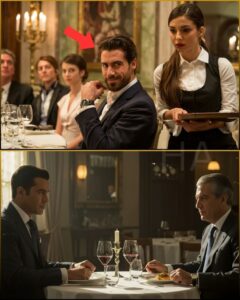
Billionaire Insults Waitress in Italian — Stunned When She Replies Perfectly and Calls Him Out
In New York City, power has a scent. At Veritas, the restaurant whose waiting list stretched into months, it hung thick in the air — an intoxicating mixture of truffle oil, vintage Bordeaux, and quiet entitlement. It wasn’t a place where people came to eat. It was where they came to be seen, to deal, to dominate.
For Isabella Rossi, twenty-four, it was where she came to survive.
Each evening, she tied her black apron and tucked her hair neatly into a bun, becoming invisible among crystal chandeliers and murmured conversations worth millions. By day she was an art history student at Columbia, writing essays on Caravaggio’s chiaroscuro; by night she was a waitress serving the city’s elite, her earnings feeding the ravenous cost of her grandmother’s Alzheimer’s care.
Her grandmother, Nonna Maria, had raised her with garlic-scented hands and lullabies in Tuscan Italian. Now, the old woman’s memories were vanishing one by one — but Isabella’s devotion had not. Her tips kept her alive. Her dignity kept her whole.
That night began like any other: linen crisp, glasses polished, her smile measured to perfection. But the reservation that arrived at Table 7 changed everything.
“Sterling,” whispered the maître d’. One word, and the entire staff seemed to stiffen.
Damian Sterling was not just rich. He was power personified — a billionaire industrialist, a corporate predator whose acquisitions left cities jobless and competitors bankrupt. In his world, mercy was inefficiency. In his presence, waiters trembled.
“Rossi, you take it,” said Marco, the maître d’, smoothing his tie. “You’re the calmest.”
Calm was a skill Isabella had perfected. She approached Table 7 with quiet grace, pen poised, voice even.
“Good evening, gentlemen. Welcome to Veritas. May I offer you a drink to begin?”
Sterling didn’t look up. His companions — an older Italian gentleman and a younger man — offered polite nods. Sterling merely waved his hand, a gesture as dismissive as it was commanding.
“Bring the wine,” he said flatly. “And the bread. Quickly.”
“Yes, sir,” Isabella replied, her voice silk over steel.
The meal unfolded like a ballet of tension. Isabella moved flawlessly, invisible and precise. Yet nothing she did was enough. Sterling complained the wine was too warm, the risotto too soft, the service too slow. Every remark was meant not for correction but for performance. His guests were Italian businessmen, potential partners — Lorenzo Belucci and his son, Matteo — and Sterling was peacocking for dominance.
Lorenzo, elegant and silver-haired, treated Isabella with quiet respect. Matteo watched everything, uneasy. But Sterling was relentless — playing the tyrant for applause.
Then came the moment that would change them all.
As Isabella leaned to serve his steak, her sleeve brushed his arm — a ghost of contact.
“Watch it!” he snapped, recoiling as though touched by something unclean.
“My apologies, sir,” she said softly.
He smirked, then turned to his guests, switching to fluent Italian. He assumed she wouldn’t understand.
“Guarda questa contadinella,” he said, gesturing toward her with his fork. Look at this little peasant girl.
Lorenzo’s eyes hardened. Matteo shifted uncomfortably. Sterling mistook their silence for amusement and pressed on.
“She thinks she’s someone special, with that serious face,” he went on, his tone dripping venom. “But she has the brain of a chicken. Just a pretty little thing to carry plates.”
Isabella froze. The words hit her like glass shards — contadinella. Chicken-brained. The same insults northern Italians had once hurled at her grandfather when he left Tuscany to find work in Milan. The same words that had followed her family across an ocean.
She could have walked away. She should have. Rent was due. Medical bills loomed. Survival demanded silence.
But something inside her refused to kneel.
She turned, slow and deliberate. Her face serene, her eyes blazing.
“Signor Sterling,” she said — in Italian so flawless it silenced the room. The sound of her voice, formal and musical, cut through the air like crystal breaking.
“Your opinion of my intelligence,” she continued, “is entirely irrelevant to me.”
The billionaire’s hand went slack. His fork clattered against his plate.
Her gaze didn’t waver. “But your rudeness, sir, insults not only me — it insults this restaurant, its chef, and your guests, who are forced to endure your performance.”
She turned briefly to Lorenzo. He inclined his head, his expression unreadable — a quiet salute.
Then she stepped closer to Sterling. Her voice lowered, each word a blade wrapped in velvet.
“I know exactly who you are,” she said. “You’re the man who dismantled Moretti Textiles in Prato six years ago — a family business that fed five hundred people. My grandfather was one of them.”
The name hit him like a blow. Moretti. He remembered the file vaguely — a small Italian manufacturer, folded into one of his acquisitions and gutted for profit.
“I saw who you are that night,” Isabella said coldly. “The question is — do you?”
The silence was absolute. The hum of conversation across Veritas stilled. Sterling sat pale, speechless, his empire suddenly meaningless before the fury of one waitress’s truth.
When the maître d’ arrived, breathless and panicked, Lorenzo Belucci spoke first.
“There’s no problem, Marco,” he said, his tone smooth and regal. “This young woman was simply clarifying a point of Italian history.”