It took Donald Trump one week in the Oval Office to set off an immigration firestorm with the stroke of a pen.
The executive order Trump signed in January 2017 was intended to immediately deliver on a campaign pledge to ban entry into the US from certain Muslim-majority nations.
Instead, it sparked protests, a series of successful legal challenges, and recriminations from Republican lawmakers and officials alike, who viewed the effort as a half-baked, self-inflicted wound by a new administration quickly being defined by chaos.
The backlash and disarray came to define the early months of an administration that lacked the preparation, personnel and legal underpinning to impose swift and severe changes on a complex and bureaucratic immigration system.
But in the years since, that initial failure has served to obscure the eventual outcome of a policy that originated as a 2015 campaign press release calling for a “total and complete shutdown of Muslims entering the United States.”
A revised version of the proposal was later implemented, upheld by the Supreme Court and expanded. The policy dramatically slashed entries into the US and helped reshape how front-line US officials would apply immigration law around the world.
As Trump and his advisers map out a potential second-term agenda, the pathway to the implementation and application of the travel ban is a critical window into understanding their ambitions for immigration policy.
The anti-immigrant rhetoric that defined Trump’s successful 2016 campaign has darkened and grown even more inflammatory as he seeks a return to the White House.
He has framed the current migrant crisis as an “invasion” by dangerous criminals, who in some cases “are not people.”
But the focus on Trump’s incendiary language can obscure an expansive and largely unprecedented swath of immigration policy proposals.
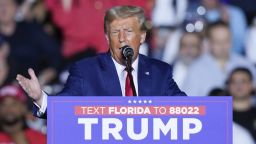
They include mass arrests, detention and deportation. Federal law enforcement would be restructured to direct “massive portions” of agency personnel toward immigration enforcement. The National Guard would be deployed and, if necessary, US troops as well.
Trump’s advisers don’t see their agenda as aspirational political messaging.
“Think about the first term, but on steroids,” a former senior Trump administration official who is working outside the campaign to draft immigration policy options for a second term.
In interviews with more than a dozen Trump allies, lawmakers and advocates opposed to his immigration positions, there’s consistent agreement on one thing: Trump has every intention of making good on what he’s pledging at campaign rallies.
“It’s important to kind of take him at his word of what he’s promising,” said Todd Schulte, the president of the immigration and criminal justice advocacy group FWD.us, which battled with Trump during his first term. “What I do know is that his tools to try and do it will have radically expanded from last time.”
Should Trump defeat President Joe Biden in November, advisers and outside allies say they have mapped out a concrete pathway to rapid implementation of that agenda, bolstered by the lessons learned from Trump’s previous stint in office and the steady and systematic weakening of the key forces that hampered those earlier efforts: public opinion, Congress and the courts.
Plans and personnel
Stephen Miller, one of Trump’s closest advisers who is expected to run point on immigration in a potential second term, said on a January podcast that their plans would call for “an all-of-nation, all-of-government, state, local and federal effort.”
“It’s a feat similar in size and scale to the other Great American projects that have been undertaken, for example, the transcontinental railroad or digging the Panama Canal,” Miller told podcast host Sebastian Gorka, another onetime Trump adviser who remains close to the former president.
The rapid implementation of those proposals would be driven by veterans of Trump’s first term, who would once again be tapped to lead the effort.
One Democratic lawmaker who works on immigration issues told CNN that Miller was “the most dangerous person in Trump’s inner circle.”
Asked why, the lawmaker replied: “Because he has an encyclopedic knowledge of how things actually work.”
The plans are neither secret, nor subtle. Instead, they are being shaped by close allies and Trump administration veterans.
“On Day One, we will begin the largest domestic deportation operation in American history,” Trump says at every campaign rally.
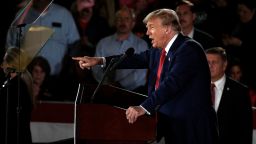
He even cites the precedent his team plans to utilize for the effort – the deportation initiative undertaken by the Eisenhower administration in 1954. Behind the scenes, advisers are eyeing statutes ranging from the 18th century to the Clinton era to provide the necessary legal underpinning.
Draft executive orders have been formulated and would be ready to be revised and deployed at Trump’s request.
Key personnel priorities – particularly for political appointees who wouldn’t need to go through a Senate confirmation process – have been mapped out to ensure Trump’s plans would be put into motion immediately.
Trump White House veterans are keenly aware of career government officials on the front lines who were aligned with and willing to embrace and implement Trump’s hard-line policies.
In his campaign speeches, the former president has pledged to dramatically expand ideological screening, use federal law to “deny entry to all communists and Marxists,” and to revoke the visas of “radical anti-American and antisemitic foreigners” enrolled at US colleges and universities.
Refugee and asylum claims, both key targets during Trump’s first term, would once again be sharply curtailed.
Temporary work permits would be terminated and Trump has pledged to halt the use of parole authority.
The pandemic-era authority known as Title 42, which the Trump administration utilized to implement a de facto shutdown of the southern border, would be reimplemented.
Trump, who while in office privately raised the idea of shooting missiles into Mexico to take out “drug labs,” has campaigned on an explicit war against cartels.
The US Navy would be deployed to impose a “full naval embargo on the cartels,” according to the policy laid out on Trump’s campaign website.
The Pentagon would be directed to deploy special forces, cyber warfare “and other covert and overt actions to inflict maximum damage on cartel leadership, infrastructure, and operations.”