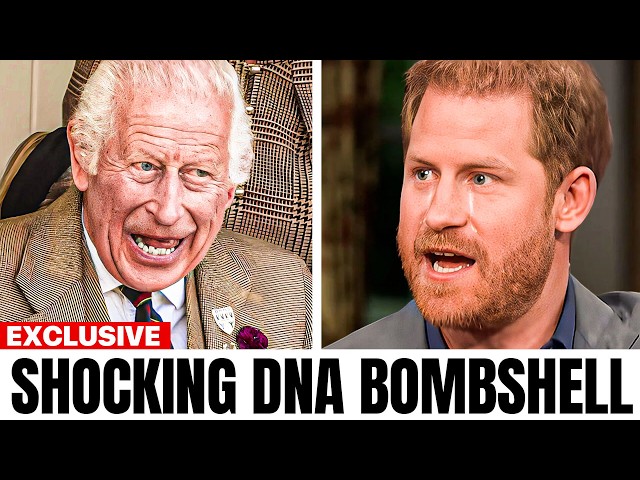
In a shocking twist to the ongoing saga of Prince Harry and the British royal family, recent revelations suggest that the DNA results asserting Harry is not the biological son of King Charles III were intentionally falsified. In an emotional confrontation, Harry reportedly shared his anguish with his father, exposing a deeply unsettling family secret that has implications for the royal lineage.
According to insider reports, Harry broke down in tears during a private meeting with King Charles, during which he alleged that a member of the royal family had orchestrated the forgery of the DNA results. “That person didn’t want me to compete for the throne with them; it was…” Harry was quoted as saying, though the report did not disclose the identity of this alleged conspirator. The gravity of his words has sent shockwaves through the monarchy, raising questions about loyalty, betrayal, and the lengths to which individuals might go to protect their interests within the royal family.
The roots of this controversy extend back several years, intertwined with the broader narrative of Harry and Meghan Markle’s departure from royal duties and their subsequent move to the United States. Speculation surrounding Harry’s paternity has circulated for years, fueled by rumors and tabloid stories. However, the recent claims bring a new level of intensity to the conversation, suggesting that misinformation has been used as a weapon against Harry.
Insiders reveal that Harry has felt increasingly isolated within the royal family, battling not just public scrutiny but also what he perceives as a concerted effort to undermine him. His allegations of forged DNA results could explain his tumultuous relationship with certain family members and his decision to step back from royal duties in 2020. Sources close to Harry have described him as “haunted” by the idea that his own family would go to such lengths to discredit him.
The implications of these allegations are profound, not just for Harry but for the royal family as a whole. If true, they could spark a crisis of confidence in the monarchy, as public trust is vital for the institution’s survival. The British public has been known to rally around its royals, but revelations of internal sabotage may lead to a significant shift in sentiment.
Moreover, the question of paternity raises further concerns about the future of the monarchy. If Harry is indeed the biological son of King Charles, the legitimacy of his place in the line of succession is reinforced. However, if the allegations of forgery are found to have merit, it could throw the very foundations of the royal lineage into disarray, leading to calls for greater transparency and accountability within the institution.
As the story develops, reactions from the royal family have been notably absent. There has been no official statement regarding Harry’s claims, and royal insiders are reportedly urging the family to remain silent to avoid escalating tensions. However, the public is eager for answers, and speculation about the identity of the alleged forger continues to swirl.
Supporters of Harry argue that his revelations are a courageous stand against a system that has often been unforgiving to those who dare to challenge it. They view him as a man seeking to reclaim his narrative amidst a whirlwind of media attacks and familial betrayal. Conversely, critics suggest that these claims could be an attempt to garner sympathy and deflect attention from Harry and Meghan’s own controversies.
In conclusion, the allegations made by Prince Harry about faked DNA results have opened a Pandora’s box of questions regarding loyalty, betrayal, and the complexities of royal life. As the world watches this drama unfold, it remains to be seen how the royal family will respond and what consequences may arise from these explosive claims. The monarchy stands at a critical juncture, with its future perhaps hinging on the truth behind Harry’s distressing revelations.