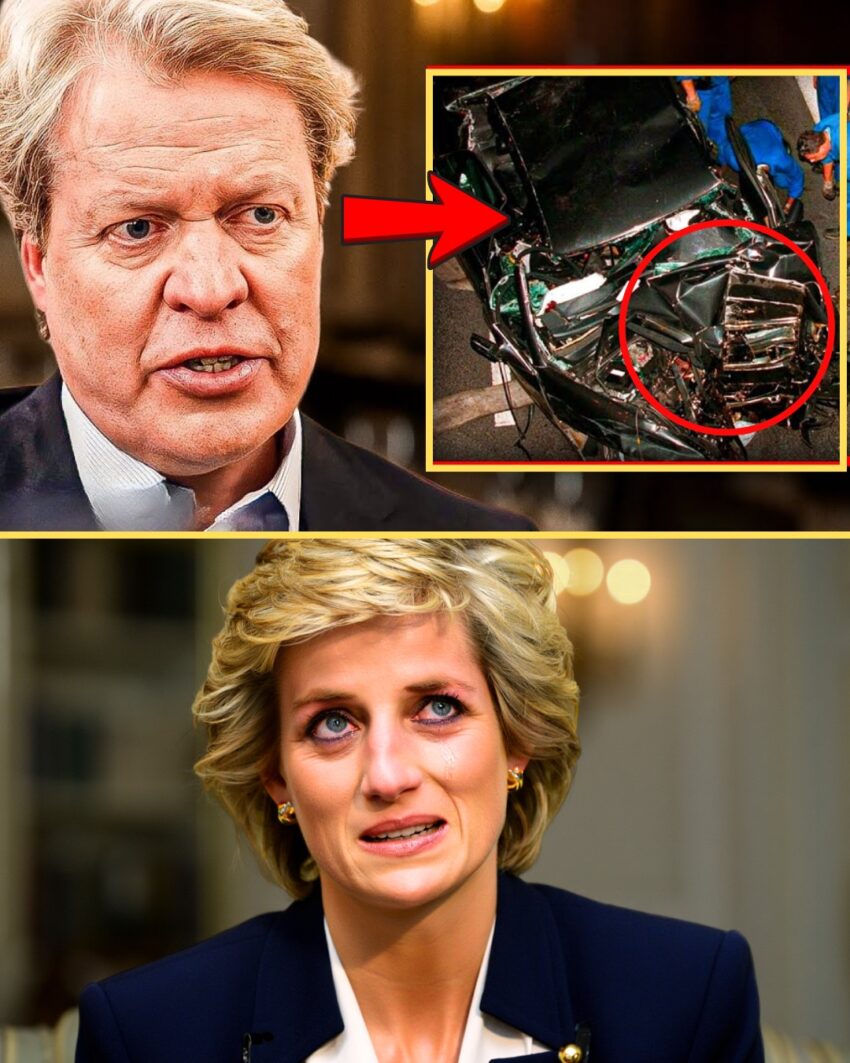

“I HAD IT ALL — EVIDENCE IN HANDS…”: Charles Spencer Leaves World STUNNED as He Speaks Out About What REALLY Happened to Princess Diana That Night in Paris
In the early hours of August 31, 1997, the world watched in horror as Princess Diana died in a car crash in the under‑bus of the tunnel beneath the Pont de l’Alma, Paris. Wikipedia+2British Vogue+2 For decades since, the nature of that tragic night has been the subject of endless speculation, conspiracy theories and emotional reckonings. But now, Diana’s brother Charles Spencer has stepped forward in a way that has shocked observers and reignited debate.
In recent public comments, Spencer has asserted that he held “evidence in hands” about how that night truly unfolded. He has drawn attention to the role of the media’s relentless pursuit of the Princess, the steering of the getaway vehicle, and the chaotic aftermath of the crash. Spencer, who has long been vocal about the invasive press coverage his sister endured, now claims that many of the accepted narratives must be re‑examined.
Spencer’s position is that the official investigation – although thorough – did not fully convey the scale of pressure Diana was under in those final hours. In media interviews he emphasised that the chase of paparazzi motorcycles outside the Ritz hotel in Paris, the reckless speed of the driver, and the fatal collision inside the tunnel were framed by a toxic cocktail of fear, desperation and institutional negligence. Vogue Philippines+2British Vogue+2 He has charged that “evidence” of intrusion, threat, and reckless behaviour was present long before the Mercedes crashed into the pillar.
Indeed, Spencer told the press that although investigations such as Operation Paget concluded the driver’s gross negligence combined with paparazzi pursuit caused the crash, they only scratched the surface. British Vogue+1 He further argued that he personally gathered documentation and witness testimony that had never been publicly vetted—hence his dramatic claim of “having it all in hands”. Whether this refers to private correspondence, press‑agency records or internal hotel reports, Spencer’s assertion has stirred a fresh wave of questions.
The gravity of his remarks comes into focus when one considers his longstanding critique of press intrusiveness. As early as 2004, Spencer warned that the media’s predatory behaviour played a “direct hand in her death”. TIME+1 Now, he frames the night of the crash not merely as a tragic accident, but as the culmination of a chain of events many of which were preventable.
Spencer’s commentary has one key implication: that the death of Princess Diana was not simply the result of bad luck, but of a system that had failed her—at least in his view. He emphasises the responsibility of the paparazzi, of the security arrangements around the hotel, and of an automobile being driven at high speed in deviance of protocol. While Spencer stops short of accusing any single actor of orchestrating foul play, he underscores that the official verdict hides complex layers of culpability.
To public reaction, Spencer’s disclosure has been startling. A figure who long maintained a respectful silence about the most controversial elements of the crash has now adopted a far more direct tone: “I had it all, evidence in hands,” he reportedly declared. Whether that will trigger renewed official inquiry or remain a personal stance remains uncertain. But it has undeniably reignited interest in what really happened that night in Paris.
For the public and for the royal family, Spencer’s words raise fresh concerns. How much of the truth will emerge? Is the full picture one of simple misfortune, or does it implicate broader failures? As the brother of one of the most‑iconic figures of our time, Spencer’s voice now carries a resonance few others can muster.
Whatever the outcome, one thing remains clear: the world still remembers the black Mercedes entering the tunnel, the flash of cameras, the tragic crash—and now it is listening again to the man who says he has the pieces of the puzzle in his hands.