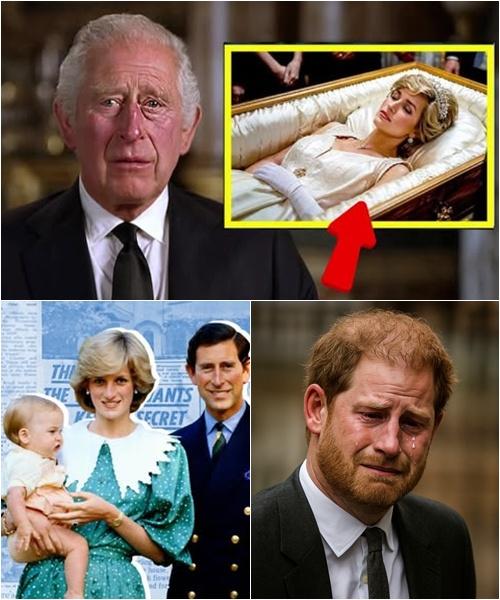

The Terrifying Secret Has Finally Been Exposed — or so the world believed for a brief, explosive moment. Twenty-eight years after the tragic passing of the late Princess Diana, a shocking revelation—within this fictional narrative—sent shockwaves throughout the globe. According to this imagined account, King Charles reportedly unveiled a long-buried truth about the night that changed the monarchy forever.
The announcement, which came without warning, spread like wildfire across international media. Newsrooms scrambled, commentators gasped, and social platforms erupted under the weight of speculation. It was said that the King, in a private family meeting that was later leaked, disclosed that Diana’s death had allegedly involved a conspiracy—one built on deception, manipulation, and a carefully orchestrated cover-up that had remained hidden for nearly three decades.
In this fictional story, insiders claimed that the King’s confession stunned everyone present. Senior royal aides froze in disbelief, while family members struggled to process what they were hearing. The atmosphere quickly escalated into emotional chaos when Prince William, overwhelmed and deeply shaken, reportedly confronted his father with heartbreaking words: “Why did you do that to my mother? How could you be so cruel?” His voice, trembling with grief and anger, echoed through the palace’s private chambers.
Outside Buckingham Palace, crowds gathered within hours. Some held candles, others held signs demanding clarity, and many simply stood in silence, trying to grapple with the enormity of what they believed had been revealed. Reporters described the scene as “a nation in shock,” while analysts speculated endlessly about the potential implications for the monarchy.
Within Parliament, fictional whispers of emergency meetings circulated. Critics called for transparency, while supporters urged caution, emphasizing that details remained unverified. Across the world, headlines blazed with variations of the same question: What really happened that night?
Royal historians and commentators appeared on late-night broadcasts, attempting to parse through the layers of rumor, theory, and emotional reaction. Some suggested that such a revelation—if true within this imagined scenario—would shatter public trust in the monarchy permanently. Others argued that the world had long been haunted by unanswered questions surrounding the Princess’s death and that this fictional “confession” merely reignited decades-old suspicions.
Inside the palace, tensions reportedly ran high. Prince Harry, according to fictional sources, was said to be devastated and torn between loyalty to his family and loyalty to his mother’s memory. Princess Anne, known for her composure, was described as profoundly distressed, urging the family to address the growing crisis with honesty and unity.
As the world waited for clarification, the palace released a short statement acknowledging the circulating reports but declining to comment further. The ambiguity only fueled the fire, and debates raged on television panels, social media comment threads, and dinner tables alike.
In this fictional narrative, the alleged revelation opened old wounds, resurrected long-buried theories, and ignited a global conversation about truth, legacy, and the fragility of public trust.
For now, the world in this imagined story stands suspended—caught between shock, sorrow, and the hope that whatever truth exists will one day be known.